
The Niggle That Never Leaves: How Bodywork Gets Sports Injuries Moving Again
I'm Sid Biggs, a clinical bodyworker in Mermaid Waters. Here's how slow, targeted bodywork helps sports injuries and chronic pain recover, including real cases from my table.
There's a particular kind of frustration I see walk into my studio, and it's not the fresh injury. Fresh injuries have a plan: rest, rehab, return.
It's the old one. The tennis elbow that's been "about to settle down" for eight months. The hamstring that technically healed a year ago but never let you sprint properly again. The shoulder that aches after every game and every gym session, and has for so long you've stopped calling it an injury — it's just part of playing now.
If that's you, this one's for you. And I want to start with some people from my table, because chronic pain stories tend to end the same way — "I've just learned to live with it" — and I'd like to show you a few that didn't.
Four niggles that were supposed to be permanent
The baseballer's elbow that flared with every throw. A client came to me with long-running tennis elbow — the kind that flares with every throw and every grip, and had already outlasted the usual advice. When we assessed properly, her elbow was the victim, not the culprit: her forearm and the tissue up through her arm and shoulder had been locked in a protective brace for so long that every throw loaded the same overworked tendons. We've been working through that whole chain with slow, sustained release — and she's back playing her sport without pain. Not managing it. Playing.
The hamstring that "healed" but never came back. Tears do heal — but the body doesn't forget them. After an injury, the tissue around the repair often stays guarded: shortened, stuck, and quietly stealing your stride length. One client came to me long after their hamstring injury was officially "recovered," still unable to trust it, still tight no matter how much they stretched. The work wasn't on the injury site — it was releasing everything around it that was still bracing for an injury that had already healed. Flexibility they hadn't had since before the tear came back over a handful of sessions.
The basketballer's shoulder. Years of chronic shoulder pain — the kind you warm up around, ice after, and slowly build your game around avoiding. The assessment told the usual story: the shoulder joint itself was fine, but the tissue through the chest, upper back and neck had organised itself into a permanent flinch. Release that pattern and the shoulder finally got to just be a shoulder. That ache hasn't been back.
The knee that had opinions about everything. Chronic knee pain almost never starts in the knee — the knee is a hinge caught between what your hip and your ankle are doing. This client had spent years treating the knee itself. What actually needed releasing was above and below it: hips and quads on one side that had been doing double duty for years. The knee stopped complaining once the load stopped landing on it sideways.
Different sports, different joints — one pattern.
The injury heals. The bracing pattern your body built around it doesn't — not on its own. That's the part I treat.
Why sports pain becomes permanent (when it doesn't have to)
Here's the mechanism, because I think people deserve to understand their own bodies rather than just being told to rest.
When you get injured — or even just repeatedly overloaded — your body protects the area. Muscles around it tighten. Fascia, the connective tissue that wraps everything, stiffens into the shape of that protection. Other muscles take over jobs they were never built for. It's brilliant in the short term. It's the reason you could finish the game.
The problem is that the protection doesn't automatically switch off when the tissue heals. You're left running a compensation pattern: one glute doing the work of two, a forearm bracing against every throw, a chest pulling a shoulder forward into the exact position that makes it ache. Rest doesn't undo that — rest is just pausing the pattern. Stretching often can't reach it either, because you can't stretch your way out of tissue that's actively guarding.
What does shift it is slow, sustained, targeted pressure — held long enough for the tissue to stop bracing and let go, then reassessed so the next restriction in the chain gets found. It's the same principle I've written about with deep tissue work near Broadbeach and even hands and forearms: find the cause, treat the chain, not the sore spot.
Where this fits with your physio
I work in conjunction with physios, osteos, doctors and club medical staff all the time — different tools, same goal, and plenty of my clients see me and their physio for different jobs in the same recovery. And you don't have to wait until you're "cleared" to come in. Even with a fresh injury — say, a hamstring that went last weekend — there's work I can do from day one. It's not the deep, sustained release we'd do later; it's gentler work that supports circulation and drainage around the injured area and keeps everything around it from locking into a protective brace while the tissue repairs. Your first session with me is an assessment anyway — that's the point of it. I'll tell you what I can help with, what stage it's at, and what belongs with someone else.
Where my work really earns its keep is the part that so often gets left unfinished: the movement side of recovery. The rehab is done, the scans are clear, you've been discharged — and you still don't move like you used to. Or nothing was ever "injured" enough for treatment, but you've carried the same training ache for two seasons. That gap between medically recovered and actually moving well is exactly where clinical bodywork lives.
One thing I won't pretend: I'm not an X-ray machine. If something's giving you numbness, tingling, or a joint that won't hold weight, that needs a proper medical look — get the diagnosis. But you can see me straight away alongside that, and often the assessment on my table is what tells you how urgent that referral really is.
For the local clubs and weekend warriors
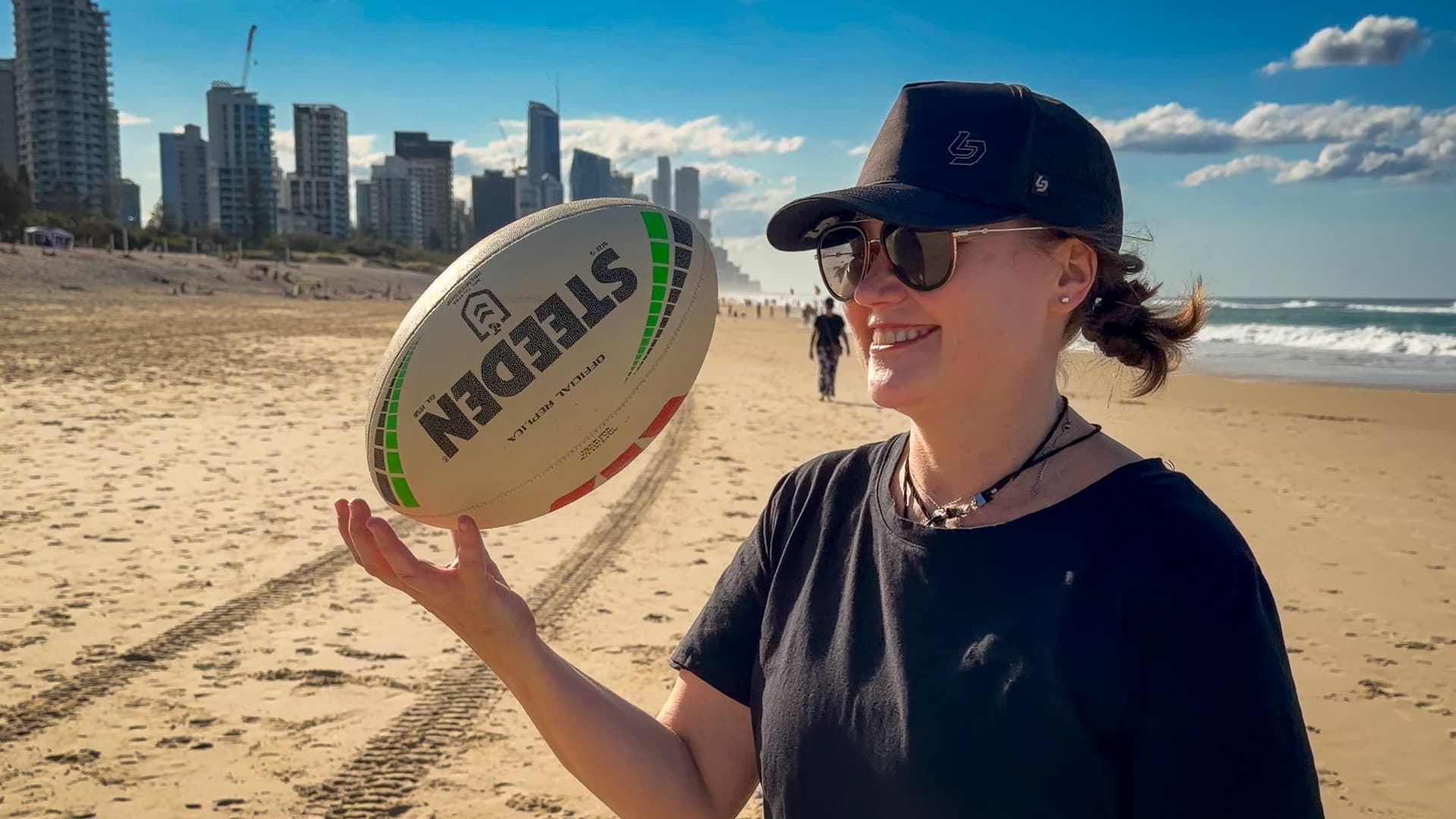
I'm five minutes from Broadbeach and about ten from Burleigh, which means my table sees a steady stream of footballers, league players, surfers and surf lifesavers, runners, netballers, golfers, gym-goers and social sport tragics from Mermaid Waters, Broadbeach, Burleigh and everywhere between. Training load is training load, whether you're chasing a premiership or chasing your kids around Pizzey Park.
And if you're involved with a club or organising a carnival: I'm open to coming to you. Recovery sessions for a team after a heavy game block, or a treatment setup at a sports carnival — with package pricing that makes sense for a group. If that sounds like something your club would use, call or text me on 0490 804 159 and we'll work out what fits.
The part where I tell you there's hope
If you've got a niggle you've been carrying for a season — or five — I want you to hear the actual message of those four stories: chronic doesn't mean permanent. It usually just means the cause hasn't been found yet.
Most people start with a 90-minute Initial Assessment and Treatment. We look at how you actually move, find where the compensation pattern lives, and start releasing it in the same session. You'll know within two or three sessions whether this is working for your body — I'll tell you straight either way, because that's rather the point of me.
Book an Initial Assessment or read more about how I work with sports and gym recovery first. Your niggle has had a long enough run.
Start With a Conversation.
Conditions We Treat