Treatment Focus
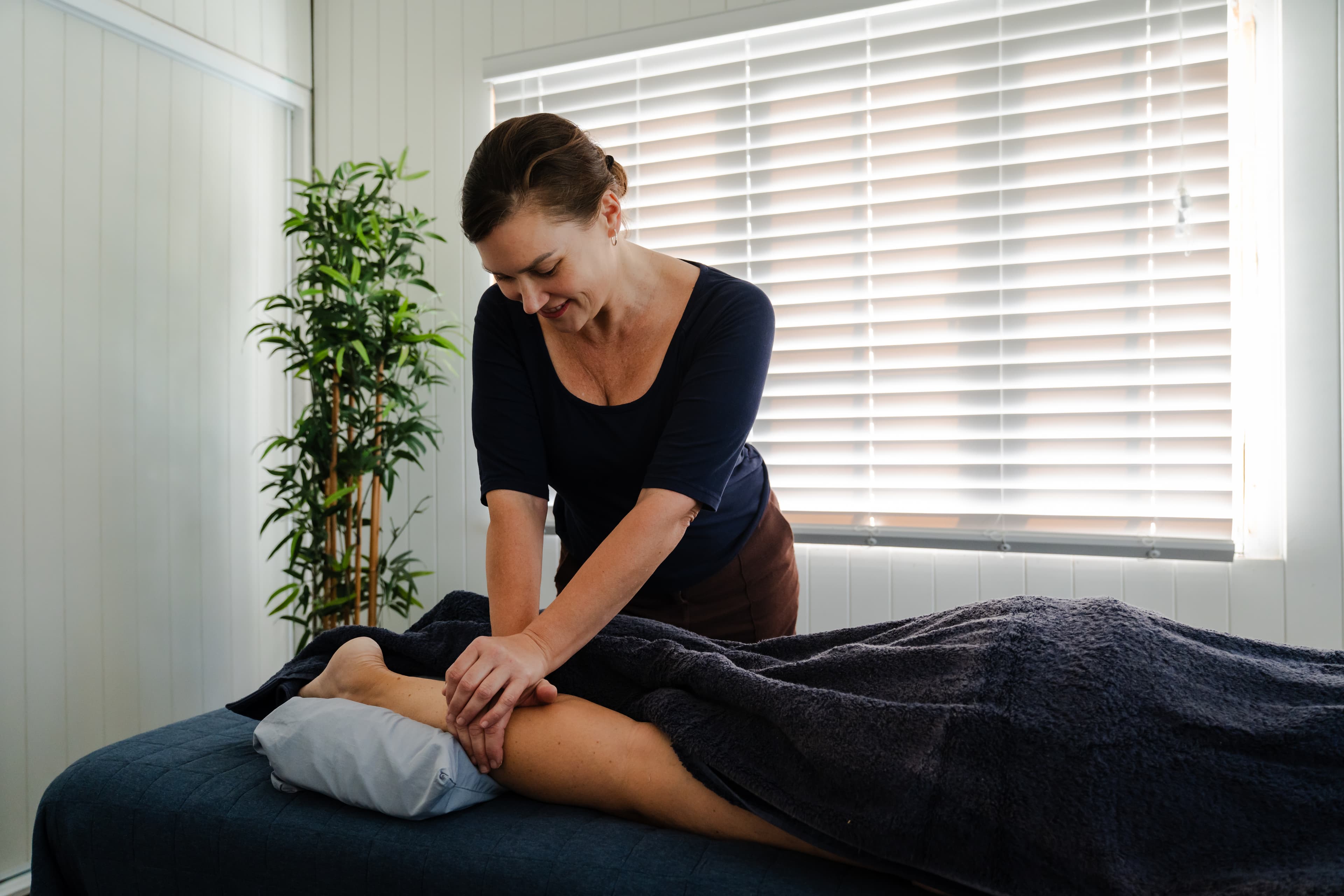
- Deep tissue through calves, hamstrings and quads
- Myofascial release along the posterior chain
- Targeted plantar fascia and foot work
- Full lower body kinetic chain assessment

Common Symptoms
Leg, knee and foot pain is rarely coming from just one spot. It’s usually a build-up of tension and restriction through the lower body that changes how you move, train and recover.
Discomfort or pressure during everyday movement, training or stairs.
A constant feeling of tightness or fatigue, especially after activity or long periods on your feet.
Sharp or aching pain under the heel or arch when you first stand or walk.
The back of the leg feels restricted, prone to pulling or always tight.
Symptoms settle briefly but come back once you start moving again.
Legs, knees or feet feel tight when getting up after being still.
Understanding the Pattern
Lower body pain is rarely caused by a single issue. It’s usually the result of tightness, overload and movement patterns building over time.
Tight calves increase tension through the Achilles and foot, contributing to heel pain and restriction.
Limited or weak hip function shifts load into the knees and lower legs.
Running, gym work or sport can overload the same structures repeatedly.
Changes in how the foot absorbs impact can increase stress through the arch and heel.
Old injuries often leave behind patterns that affect how you move.
Holding one position for too long can lead to stiffness and reduced circulation.
Clinical Observation
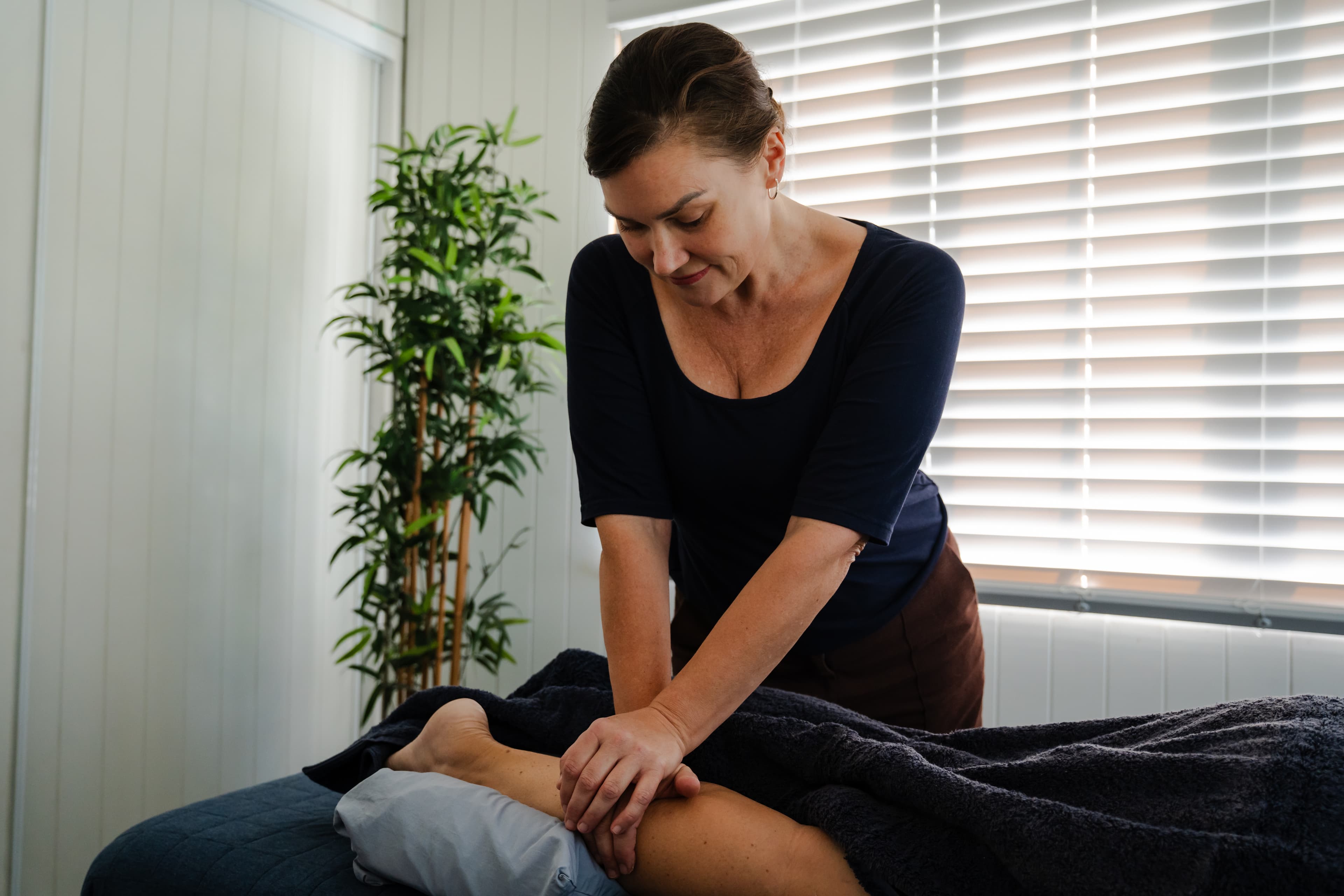
Treating the source of tension, not just the symptoms.
Clinical Insight
Lower body pain often shows up in one area, but the cause is usually somewhere else.
Tension through the calves, restricted hips or changes in how your body absorbs load can all shift pressure into the knees and feet. That’s why treating the sore spot alone often doesn’t fix the issue.
This approach looks at how the lower body is working as a whole — reducing tension, improving movement and helping load move through the body more evenly.
The goal isn’t just to ease symptoms for a few days.
It’s to help your body move in a way that doesn’t keep triggering the same pain.
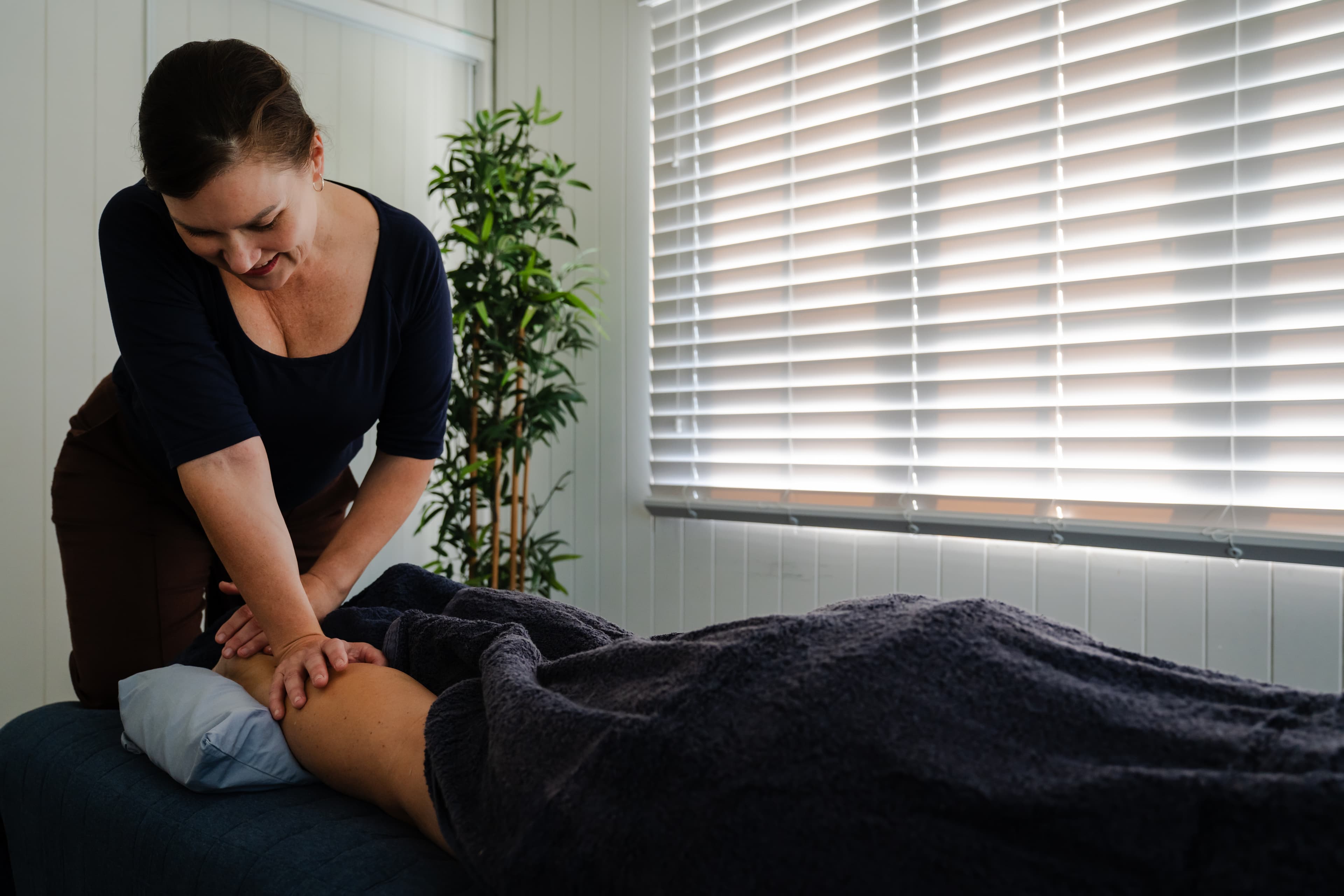
When load is distributed properly, the lower body moves with less strain and fewer recurring issues.
How Bodywork Helps
Knee pain, plantar fasciitis and calf tightness almost never start where they hurt. Knee pain is frequently driven by tension in the IT band, quad or hip pulling the joint out of tracking. Plantar fasciitis heel pain is often caused by calf and Achilles tension above it — releasing that upstream tension is frequently more effective than treating the heel alone.
Many clients with plantar fasciitis or calf-driven knee pain notice meaningful change within 2–3 sessions once upstream tension is addressed. Earlier treatment means better results.
Related conditions
Pain is often interconnected. You may also find these specialised treatment areas relevant to your recovery.
Book a Session
If you're new, start with the Initial Assessment. We'll look at what's driving your knee, leg or foot pain — not just where it hurts — and begin targeted treatment in the same session.
No lock-ins. Just a clear plan from your first session. By appointment only — book early to secure your preferred time.By appointment only — book early to secure your preferred time.
Move Better. Feel Better. Stay That Way.
Common Questions
Recurring pain is often caused by tension or movement patterns elsewhere in the body, not just the area that hurts.
It may help reduce tension through the calves and foot, which can take pressure off the heel and improve movement.
Persistent calf tightness is often linked to load, movement patterns or compensation from other areas like the hips.
Yes. This approach is suited to people who place regular load on their lower body through running, training or sport.
Not necessarily. Ongoing or recurring pain is usually a sign that something hasn’t been properly addressed.
Book an initial consultation. We'll perform a full movement assessment to identify what's driving your pain and begin treatment in the same session.