Sign 1
Waking up already sore
You're sore before the day has even started, and you've quietly stopped expecting anything different.


Sound Familiar?
People rarely book bodywork because they read about fascia. They book because something like this has been going on too long.
Sign 1
You're sore before the day has even started, and you've quietly stopped expecting anything different.
Sign 2
Then the massage wears off, and you're right back where you started.
Sign 3
And it's still tight. (Often that's fascia, not muscle.)
Sign 4
You've caught yourself saying it like it's a personality trait, not a problem.
Sign 5
You pick chairs carefully. You dread the long drive. You plan your life around your body.
Sign 6
Age, desk work, "one of those things". You're not convinced.
Here's the honest bit: this doesn't have to be the pain you live with forever.
Chronic pain is common. Living your whole life around it isn't compulsory. When treatment is aimed at what's actually driving the pattern, instead of chasing the sore spot, things can genuinely start to shift. That's what this page is about.
What is it.
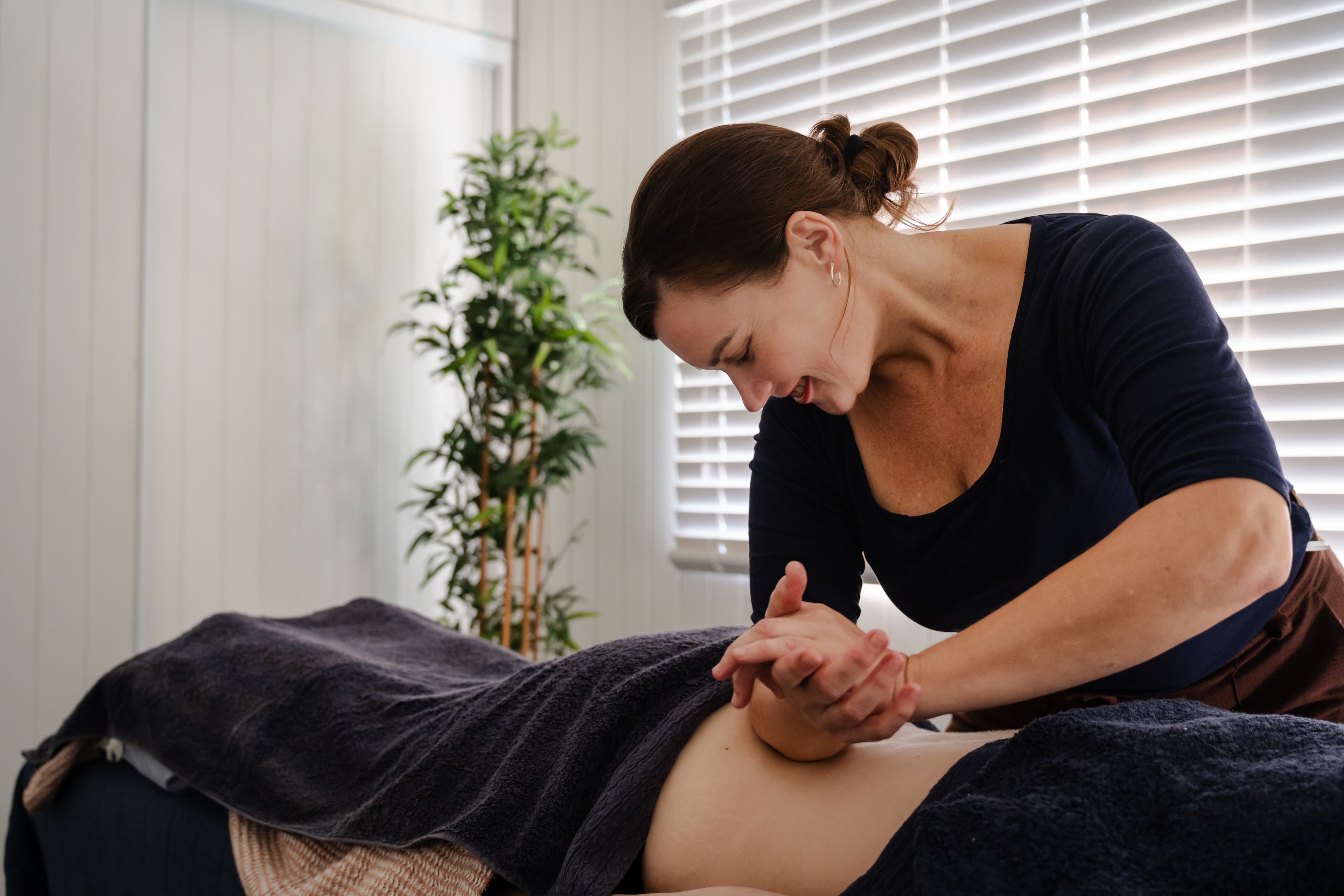
“Bodywork” gets used loosely, so here’s what I mean by it. It’s clinical, hands-on work through muscle and the connective tissue, fascia, that wraps and links it: slow, sustained, deliberate. It isn’t a relaxation massage, and it isn’t guesswork. When that tissue gets restricted you feel tight, stiff or sore in ways that don’t always add up; my job is to find those restrictions and help ease them, so you move more freely.
The Approach

This is the part that makes it different. Before I put a hand on you, I look at how you move, because the spot that hurts is often not the spot causing it. A tight hip can show up as a sore back; a locked-up shoulder as a cranky neck. I assess first, then work on what’s actually driving things, so we’re not just chasing the pain around the body. Every first visit starts here.
The Modality
The approach I trained in is muscular therapy, taught by Melbourne Muscular Therapies (MMT), It's a slow, deep, assessment-led way of working into muscle and fascia to ease restriction and support how the body moves.
The hands-on work is largely myofascial release: slow, sustained pressure that works with the fascia rather than just the muscle. Some people call it fascia release; it's the same work. The specific method I trained in through MMT is Solidified Connective Tissue (SCT) Release, an assessment-led way of working through restricted fascia. (It's a bodywork approach, not remedial massage, and isn't tied to health-fund rebates.)
The Training
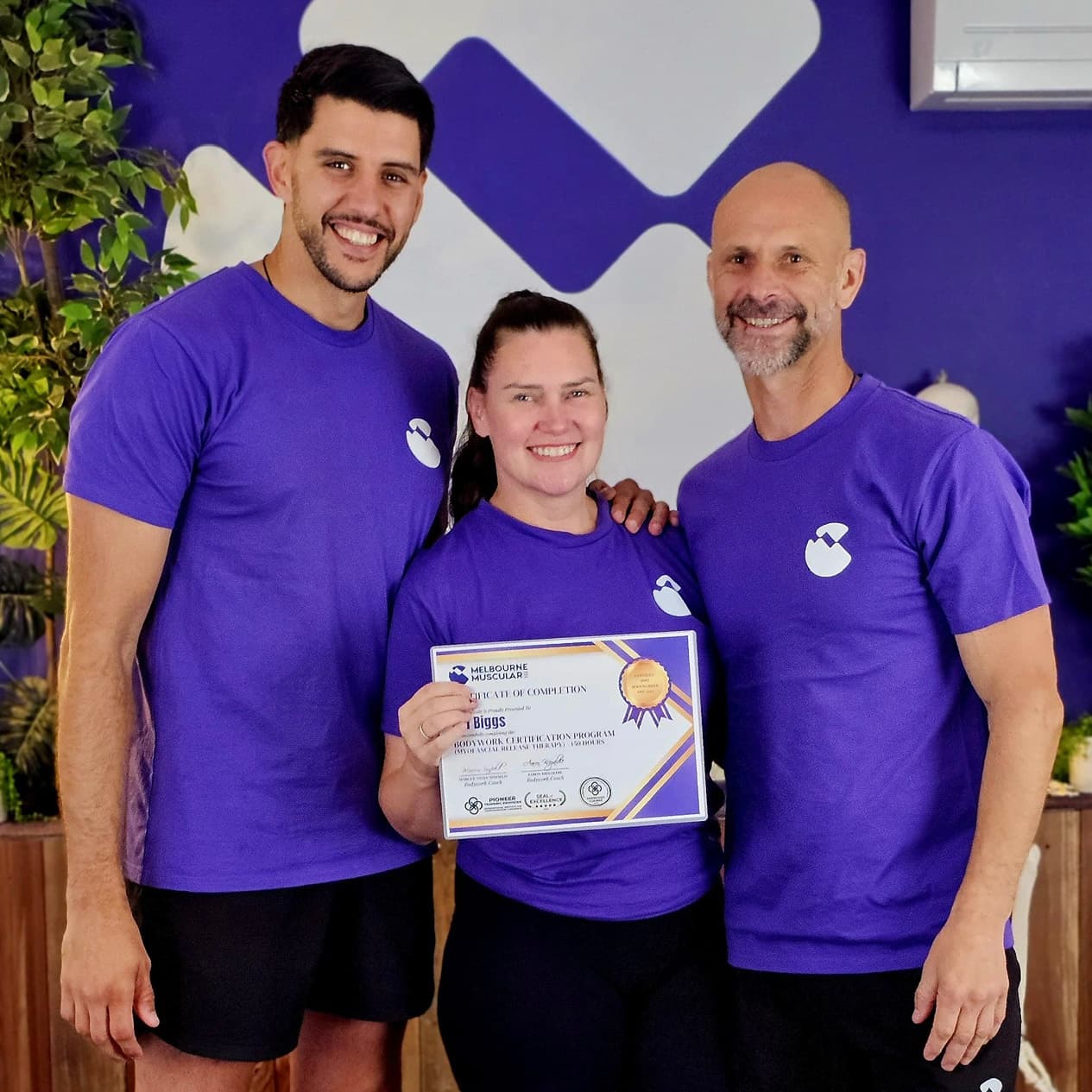
I earned my bodywork certification through MMT’s practitioner training, hands-on, mentored training in assessment and technique, and I’ve kept building on it since. It’s the reason every session here starts by working out what’s going on, rather than reaching straight for the sore spot.
In September I’m heading back to Melbourne to level up further (MMT Level 2 Myofascial Therapy), the work keeps evolving, and so should I.
Who It Helps
You don't need a diagnosis to book. Most people I see just recognise themselves in one of these.
Your Session
Step 1
We start with how you move: range, restriction, load patterns, and what's likely driving the symptom. You'll know what I'm seeing, and why, before any hands-on work.
Step 2
Slow, sustained work through the muscle and fascia involved: myofascial release, deep tissue and trigger point work, directed by the assessment. Firm but communicative; you steer the pressure.
Step 3
90 minutes is recommended so there's time to assess and treat properly; 60 is fine if you'd rather ease in. Wear or bring comfortable clothing and arrive 5 minutes early.
Step 4
Some tenderness for a day or two after deeper work is normal, like after training. Keep your water up, move gently, and notice what changes over the first few sessions.
You won't spend a session just talking about it. We work out what's going on and start on it the same day.
Kind Words
Baseballer • Back to playing, brace-free
"Seabreeze Bodywork took a personalised approach with their bodywork and took the time to delve into what the bigger issue was, rather than just a short term ‘quick fix’. After six sessions, I have full utilisation of my arm again from my tennis elbow, am no longer wearing a brace and am pain free."
Carly W.Gold Coast
Book a Session
Everything follows from there. New here? The 90-minute first session works out what's driving your pain and begins targeted bodywork in the same visit.
By appointment only - book early to secure your preferred time.By appointment only - book early to secure your preferred time.
Move Better. Feel Better. Stay That Way.
Common Questions
Massage typically follows a routine focused on relaxation and general muscle tension. Bodywork at Seabreeze begins with a structural assessment that determines what gets treated and where. The techniques may look similar from the outside — the intent, framework and outcomes are different.
No — complementary. Physio focuses on joint mechanics and rehabilitation exercise. Bodywork focuses on soft tissue — the muscles, fascia and tension patterns affecting how you move and where you hurt.
No. The initial assessment is designed to identify that. You just need to describe what you're experiencing.
The first session (90 minutes) includes a full movement assessment before any hands-on treatment. Treatment still starts that day — you're not paying 90 minutes for talking. The assessment shapes what gets treated, which is why it's longer.
Seabreeze is a women-focused practice. Men are seen by referral from an existing client.
Related Conditions
You may also find these conditions relevant to your bodywork treatment.
Book an initial consultation. We'll perform a full movement assessment to identify what's driving your pain and begin treatment in the same session.