
Level 2: Why I'm Going Back to the Classroom Next Week
I'm shutting Seabreeze for a week to sit back in a classroom. Not because the certificate wasn't enough, but because nothing checks your hands once you're working alone.
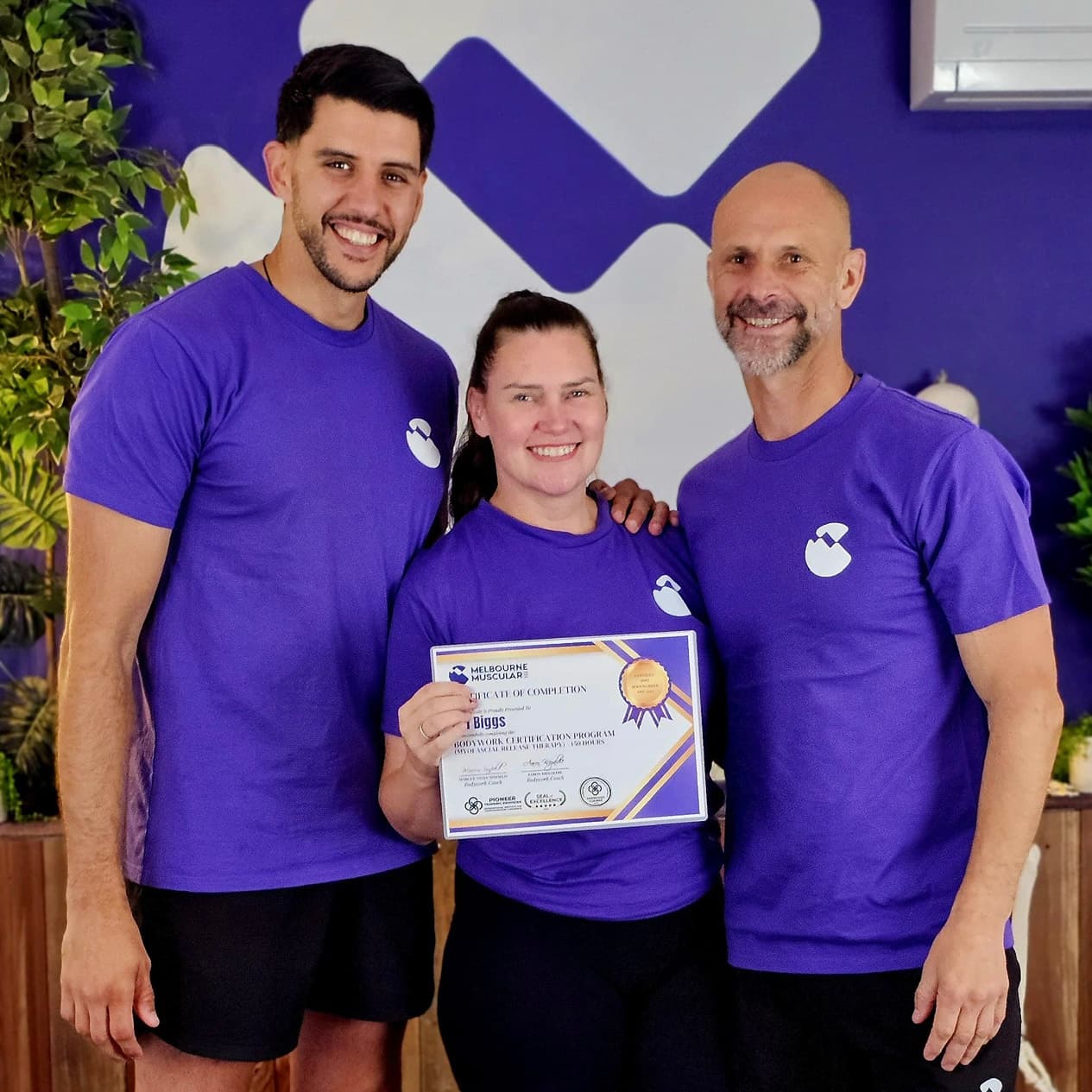
Closed all next week
The clinic's shut the whole week, Monday the 31st of August through Sunday the 6th of September. The training itself is four days, Wednesday the 2nd to Saturday the 5th, in Melbourne, doing Level 2 with MMT, the group I originally trained through. I've taken the rest of the week around it for travel.
I'm part of the first intake going through this level. No refresher crowd sitting comfortably through material they've already seen twice. It's a small group of us working through it for the first time, taught directly by the people who built it. That means nobody in the room has done this exact bit before, which is either exciting or slightly terrifying depending on the hour.
If you're a regular client, book in before Monday the 31st, or from Monday the 7th once I'm back.
You never stop learning
Here's the assumption I want to push against: that you train once, get the certificate, and spend the rest of your career applying it. Set the skill, then just repeat it forever.
That doesn't hold up for any hands-on trade, and it definitely doesn't hold up for bodywork. The reason is simple and a bit uncomfortable to say out loud. When you work alone, session after session, the only feedback you get is from yourself. Your hands get very good at whatever they already do, because nobody's in the room disagreeing with you. You don't drift because you're getting worse. You drift because nothing's checking you.
That's the actual reason for going back, not because there's a flashy new technique to bolt onto a session. It's putting my hands under people who'll catch the shortcuts I don't know I'm taking, and comparing notes with therapists working on completely different bodies to the ones I see every week. An office worker's locked-up hips and an AFLW player's hamstring aren't the same problem wearing different clothes. A method only stays sharp if it keeps meeting cases from outside your usual week.
Where the restriction actually lives
There's a specific thing about how MMT works that's worth explaining, because it's the actual point of the training rather than a formality.
The method starts with assessment, not technique. Before hands go anywhere near tissue, the question is where the restriction lives, not where the pain is being reported. Pain is downstream. A sore lower back is very often a hip that stopped moving properly months ago and has only just started sending the bill. Work the sore spot without finding where the fascia's actually stuck, and you get the pattern almost everyone's had at some point: temporary relief from a massage, and the same complaint back a fortnight later.
That's the reason I trained through MMT in the first place instead of the standard remedial route. Too many people were arriving at my table having already had the sore spot rubbed everywhere else, with the same problem still sitting there afterwards.
Level 2 sharpens exactly that assessment process. Four days of someone more experienced watching how I read a body and telling me what I'm missing. That kind of correction is genuinely hard to get once you're out running your own practice. There's no one walking the floor checking your work. You have to go and find it yourself.
What changes when I'm back
Nothing dramatic. Same clinic, same table, same approach: assessment before treatment, working with the pattern rather than chasing the sore spot. What's different is that the assessment side of it has just been checked by people who've been doing this a long time, on bodies I don't normally see. If you've got something that's been half-managed for a while rather than properly understood, that's the kind of session it'll be worth booking once I'm back.
Diary reopens Monday the 7th of September. Get in either side of the closure, and I'll see you on the table with whatever's sharper for the trip.
Start With a Conversation.
Related